
Service
Slab Leak Detection
A slab leak is a water line leaking underneath the concrete floor of a building. The signs show up long before the cause does: a warm patch on the floor, a water bill that climbs with no change in how you live, or the sound of running water when every tap in the house is off. Finding exactly where it is, down to a small area of floor, is the whole job — the alternative is opening concrete to look for it. We locate slab leaks in Melbourne, on the Space Coast and throughout Central Florida.
Finding the leak before anything is opened
We start with what the building has been doing. What you have noticed and when, which fixtures are involved, whether the floor is warm anywhere, and whether the water meter keeps moving with everything shut off. A meter that moves with the house quiet means water is escaping on the pressurized side, and that narrows the search before any equipment comes out of the truck.
We isolate and pressure test the lines so the leak belongs to one line rather than a whole house. Pressure is held and watched: a line that holds is ruled out, which is as useful as finding the one that does not. This is the step that keeps the rest of the work from being guesswork.
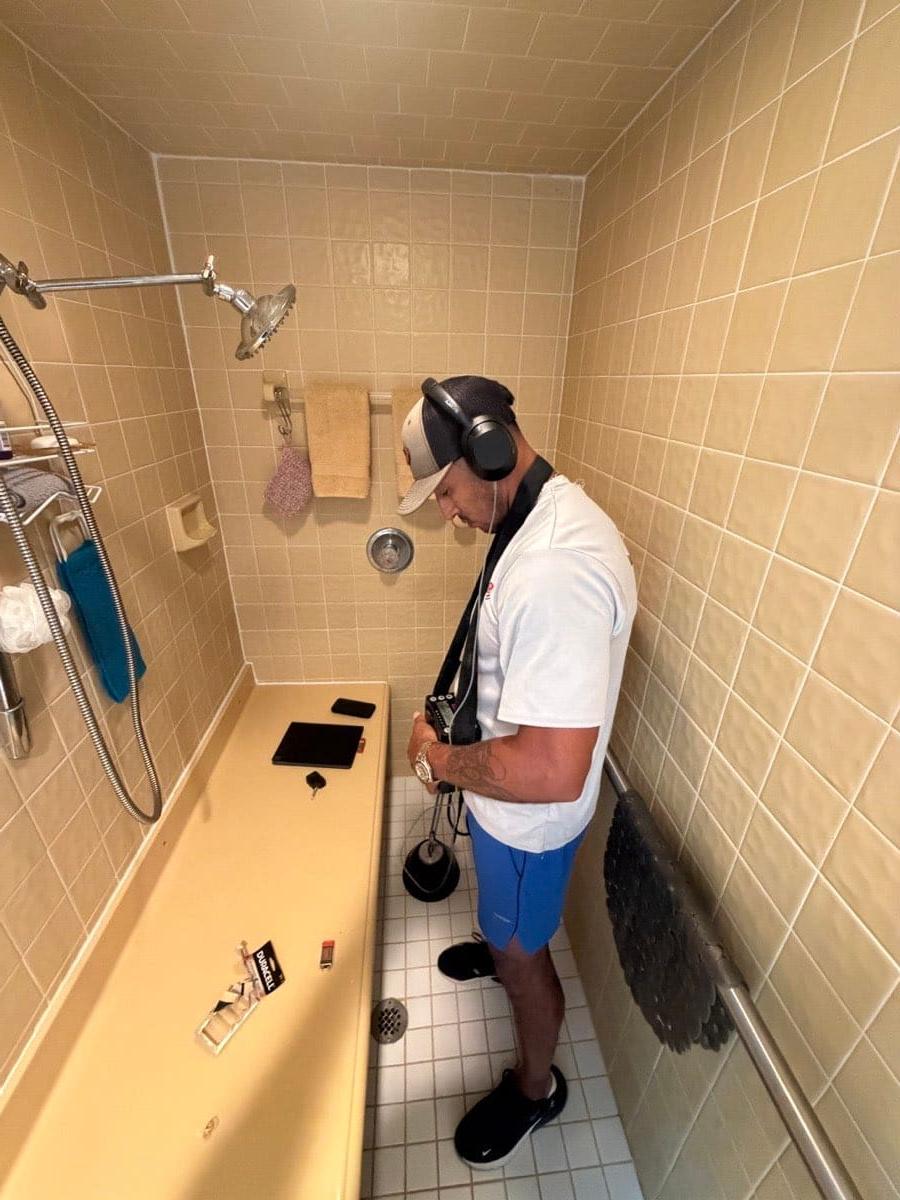
Water escaping a line under concrete makes a sound, and that sound travels through the slab. With the line under pressure we listen through the floor, working along the run of the pipe until the sound is loudest. Carpet, tile and wood stay where they are; the listening is done through them.
Thermal imaging confirms it where the leak is on a hot line. Water escaping a hot line warms the slab above it, and the warm shape on the floor is visible on the camera long before it is obvious underfoot. Where the sound and the heat agree, the location is not a guess.
We mark the spot on the floor and write down what was tested and what was found, on the invoice. That is what a plumber needs: one marked place to open, instead of a search carried out with a hammer.
We locate slab leaks. Repairing a line under a building slab is plumbing work and is not a service we offer, so nothing we tell you is shaped by wanting the repair. The marked location and the written findings are yours to hand to whichever plumber you use.
Signs of a slab leak
Any one of these is worth a call. Several together usually mean a leaking line under the slab.
- A warm spot on the floor
- A leaking hot water line under the slab warms the floor above it. It is often the first sign anyone notices, and it is usually noticed barefoot.
- The meter moves with everything off
- Turn off every tap and appliance that uses water and watch the meter. If it is still moving, water is leaving the system somewhere between the meter and the fixtures.
- A rising water bill
- An increase with no change in your usage means water is going somewhere it should not. A slab leak runs continuously, so the bill climbs month after month rather than spiking once.
- Running water with everything turned off
- Hearing water flow when no fixture is on points to a leaking line. It is usually clearest at night, with the house quiet.
- Damp or lifting flooring
- Moisture appearing at the edge of the slab, or flooring lifting with no spill to explain it. Carpet that stays damp in one place is the same signal.
- Low water pressure
- A drop in water pressure with no obvious cause can mean a leak in the line before it reaches your fixtures.
- Cracks in the slab or walls
- A long-running leak under a slab can wash out and shift the ground beneath it. It is worth ruling out before the cracks are treated as settlement.
Tell us what you are seeing
Describe what you are seeing, and we will tell you what it may mean and what a visit would involve. If the water is showing at the floor or the bill has jumped, call us. You will reach a family-owned, owner-led team.
Do you have to break the floor to find it?
Not to find it. Locating the leak is non-invasive, using pressure testing, acoustic listening and thermal imaging, and your flooring stays down while we work. Concrete is opened only for the repair, once the location is known.
Do you repair the leak once you find it?
No. In Florida we locate slab leaks; repairing a line under a building slab is plumbing work and is not a service we offer. You receive the marked location and written findings, which is what a plumber needs in order to open one spot rather than search.
What do I receive at the end?
A marked location on the floor and written findings on the invoice: what was tested, what was ruled out and where the leak is, so the repair begins at one known spot instead of a search.
How long does it take?
Most take a single visit. A building with complicated plumbing, or more than one problem at once, can take longer, and we will tell you if that is what we are finding.
Does someone need to be there?
Yes. The work is inside the building, so someone has to let us in and show us where the water heater and the main shut-off are.
Is there anything I should do before the visit?
Keep water use to a minimum shortly before we arrive, because a quiet system is far easier to listen to, and clear access to the water heater and the main shut-off. If you have noticed a warm patch on the floor, point it out when we get there.
Can you tell me what the repair will cost?
No. We do not quote plumbing work under a slab, because we do not do it. What we give you is the location and the written findings, which is what a plumber needs to quote the work accurately instead of pricing a search.
Will my insurance cover it?
That is between you and your insurer, and we will not tell you what your policy does. What we can give you is written findings describing what we tested and where the leak is, and you are free to forward them.
Do you offer this throughout your service area?
Yes. Slab leak detection is offered everywhere we work, on the Space Coast and in Central Florida.
How is this different from underground leak detection?
Our underground leak detection covers a pool’s buried lines. A slab leak is under the concrete floor of the building itself. Much of the equipment is the same, but what sits above the leak is not.